
REVIEW · OSTROG & MONTENEGRIN MONASTERIES
MONASTERY TOUR – Impressive Montenegrin Monasteries
Some rock and faith, then a full day’s stories. This private Montenegro itinerary strings together four monasteries and churches plus Saborni Hram Hristovog Vaskrsenja, so you get more than one famous stop. I especially like how the visit includes both older sacred sites and newer architecture, with guides who talk in real-world context, not just dates.
Two things I’d happily choose again: pickup that makes the day easy, and the way guides explain what you’re seeing at each location. If you’re imagining a quiet, empty monastery crawl, add one caution: Ostrog can be crowded, so expect a lively pilgrimage vibe there, even if the setting is stunning.
In This Review
- Key things to know before you go
- How this 7-hour monastery route actually works
- Dajbabe Monastery: the cross-shaped cave start
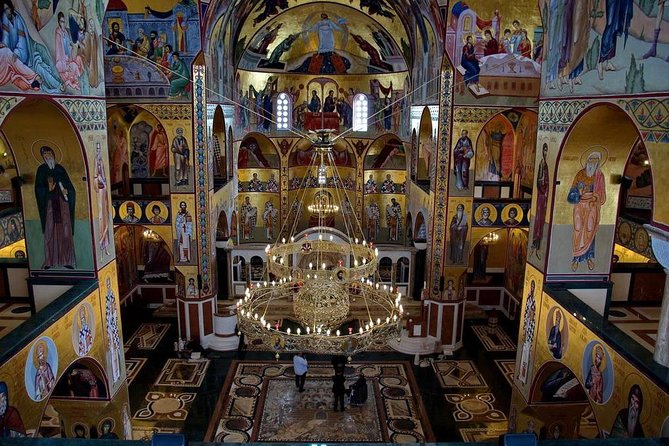
- Saborni Hram Hristovog Vaskrsenja: Podgorica’s Resurrection Cathedral
- Ždrebaonik Monastery near Danilovgrad: a monastery that kept returning
- Ostrog Monastery: the pilgrimage on steep rocks at 900m
- Why the guides make the difference (and how to spot a good day)
- Price and value: what $132.53 per person gets you
- Best fit: who will enjoy this monastery day most
- Practical tips to make the day smoother
- Should you book this Montenegrin monasteries tour?
- FAQ
- How long is the monastery tour?
- Where does the tour start?
- Is this tour private?
- What languages are available?
- Are admission tickets included?
- What is included in the price?
- What is not included?
- Does the tour require good weather?
- What is the cancellation policy?
Key things to know before you go
- Private format so only your group participates, with a guide who can adjust the pace
- Free admission at each scheduled stop, so you can plan a mostly no-surprises day
- Ostrog at 900m on steep rock gives you the classic Balkans pilgrimage moment
- A mix of old and new sacred symbols across Dajbabe, Podgorica’s cathedral, and the monasteries
- Flexible departure options, including pickup from where you prefer and an option to depart via Kotor or Budva
Other monastery visits we have reviewed
- Skadar Lake National Park: Guided Boat Tour to Kom Monastery★ 4.5 · 49 reviews
- Ostrog Monastery tour★ 5.0 · 32 reviews
- MONASTERY TOUR – Impressive Montenegrin Monasteries★ 5.0 · 24 reviews
- Private Tour in Ostrog Monastery, Doclea and Nature Park Zeta★ 5.0 · 21 reviews
How this 7-hour monastery route actually works
This is a single-day, around-7-hours outing built around driving between Podgorica and the Danilovgrad area, then finishing at Ostrog. The visiting time is scheduled tightly enough that you’ll see the full range, but not so tight that it feels like a photo dash.
You’ll go by air-conditioned vehicle, and the day is designed to be easy to join. Pickup is offered wherever you prefer, and the trip can also be arranged with an option for departure from Kotor or Budva. That matters if you’re basing yourself on the coast and don’t want to spend a half-day arranging transport.
If you like tours that feel organized but not rigid, this format tends to land well because the guide has room to talk. In real terms, you’ll get history and cultural context tied to what’s in front of you, and not just a list of highlights.
Dajbabe Monastery: the cross-shaped cave start
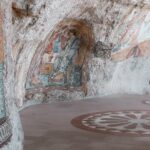
Your day opens at Dajbabe Monastery, described as an adapted cave, made in rock in the shape of a cross. It’s the kind of place where location is part of the message. Instead of a single building you admire from the road, you feel like the site itself is part of the story.
You’ll spend about 1 hour here. Admission is free, so you’re not building the day around ticket logistics. I like this first stop because it sets a theme for the day: Montenegro’s sacred places are not only about famous names. They’re also about how faith has been shaped by geology, conflict, and community life.
Potential drawback to keep in mind: the day starts with a specific kind of site, which means if you’re only interested in the biggest pilgrimage spotlight, Dajbabe might feel less instantly famous. But it’s a strong way to orient you before you reach the more widely known monasteries.
Saborni Hram Hristovog Vaskrsenja: Podgorica’s Resurrection Cathedral
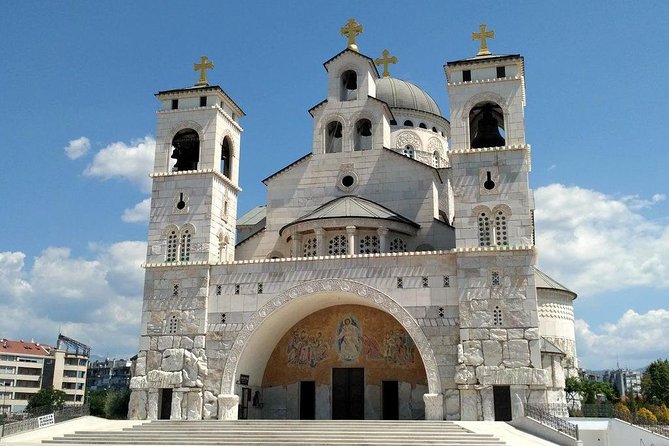
Next comes Saborni Hram Hristovog Vaskrsenja, the Gathering church of Christ’s resurrection. This stop connects the old and the new sacral symbols of Podgorica, and it’s also a lesson in how long monumental religious projects can take.
You’ll have about 45 minutes here, again with free admission. What I find useful is the way the cathedral’s construction is explained: it took 20 years to be completely finished, using techniques that were not in use for 8 centuries. Even if you’re not an architecture person, that sort of detail gives you a way to look. You start noticing choices, not just admiring size.
This stop also balances the day. After Dajbabe’s cave-cross setting, the cathedral gives you a more modern, formal presence. If you’re photographing, this is often the cleaner architectural moment of the day, simply because it’s a major, central building.
Ždrebaonik Monastery near Danilovgrad: a monastery that kept returning
Then you’ll head toward Danilovgrad for Ždrebaonik Monastery. The key idea here is survival. The monastery is described as a hero among monasteries because it was burnt and demolished in each war that occurred in this area, yet it still stands in beauty.
You’ll spend about 1 hour at Ždrebaonik, and admission is free. This is one of the stops that tends to leave a quiet aftertaste, because it’s not only religious. It’s about persistence, including what the monastery space contains.
What you’ll be told to look for includes that the convent has things like a library, dormitories, and a workshop area where nuns make icons and souvenirs. That detail matters for value. It helps you understand the monastery as a living community with craft and daily work, not only a backdrop.
If your trip schedule is tight, this stop is also a helpful middle point. After the cave site and the cathedral, it gives you another distinct style and another angle on how sacred life operates over generations.
- Skadar Lake National Park Guided Boat Tour with Wooden Boat
★ 5.0 · 91 reviews - Best from our coast (Kotor bay, Budva, Sv Stefan, Skadar lake)
★ 5.0 · 79 reviews - GREAT MONTENEGRO TOUR Cetinje – Njeguši – Kotor – Budva – Bečići – Saint Stefan
★ 5.0 · 69 reviews - Skadar Lake National Park: Guided Boat Tour to Kom Monastery
★ 4.5 · 49 reviews - Private transfers from Podgorica Airport and city to Budva
★ 5.0 · 41 reviews
Ostrog Monastery: the pilgrimage on steep rocks at 900m
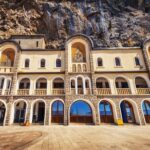
The day’s big finish is Ostrog Monastery, one of the most visited pilgrimage places on the Balkan. It’s carved into steep rocks and sits at about 900m above sea level, which is exactly why it draws people.
You’ll have about 1 hour 40 minutes here, with free admission. The atmosphere can be intense. You’ll see a lot of religious visitors and hear that it’s associated with healing and spiritual change, including a belief that miracles happen. The setting itself does half the work, because Ostrog feels like it was built to look upward.
One practical note: expect crowds. Even when the place is beautiful, the busiest pilgrimage moments can mean slower movement and less quiet time. That’s the one caution I’d plan for, especially if you want a calm, reflective vibe.
Still, the payoff is real. Ostrog is the kind of place where the story becomes visible the moment you arrive, because the whole monastery is literally part of the rock face.
Why the guides make the difference (and how to spot a good day)
This tour is private, meaning only your group participates. In practice, that usually translates into a day that feels less like a bus stop and more like a guided conversation. I also like that the tour is set up with a driver, so you can focus on the places rather than logistics.
You’ll hear different guide styles, but several names stand out from the experience, including Ivan, Tamara, Moawyah, Lidia, and Darko. The common thread is that guides don’t only recite facts. They tend to explain the bigger picture: Montenegro’s history, religion, and culture tied to what you see at each monastery.
Also pay attention to small behaviors, because they hint at how the day will run. For example, some guides are praised for being on time, for speaking very strong English (and in one case also Spanish), and for staying calm and careful while driving. Others are praised for being attentive and adjusting the tour so the timing works for the group.
One practical benefit I’d recommend looking for: a guide who plans breaks and can handle special needs. There’s at least one example of a guide coordinating support during entry gates due to a guest’s knee limitations. You don’t need that level of help, but it’s reassuring to know the day can flex.
Price and value: what $132.53 per person gets you
At $132.53 per person for about 7 hours, the value is mostly about what’s included. You get air-conditioned vehicle, all fees and taxes, and free admission at every scheduled stop.
That combination matters. Many day tours look affordable but then add tickets and site fees later. Here, the admission is listed as free for each stop, so your budget stays predictable. The itinerary also covers multiple sites that you’d be hard-pressed to arrange efficiently on your own, especially if you’re starting from Podgorica and want to reach Ostrog without wrestling with transport.
You also get pickup offered and a mobile ticket, which cuts down on the small stress items that pile up on day trips. Add group discounts and the private format, and the day can work well even if you’re not traveling solo.
If you’re traveling as a couple or small group, this tends to be a strong deal because the private setup spreads the transport cost. If you’re the kind of traveler who values story, context, and careful pacing, the higher guide quality often shows up immediately.
Best fit: who will enjoy this monastery day most
I’d point this tour toward a few types of travelers:
- You want a structured day with transport solved and admissions handled
- You’re curious about how sacred sites reflect history, conflict, and community life
- You’re okay with crowds at the big finish, especially at Ostrog
- You like guides who talk beyond surface-level details, including cultural and historical context
If you only want one famous monastery and nothing else, you might feel this is a lot of stops. But if you like comparisons, you’ll likely love the contrast between Dajbabe’s cave cross, Podgorica’s modern cathedral, Ždrebaonik’s survival story, and Ostrog’s rock-built pilgrimage setting.
Practical tips to make the day smoother
Here are the things that will most affect your comfort and enjoyment, based on how the experience is structured:
- Time your expectations for Ostrog: it’s popular, so go in ready for crowd energy and shorter breathing room
- Use the pickup flexibility: ask your operator to confirm where you’ll meet so the first hour feels effortless
- Bring patience for a full itinerary: the scheduled visiting times add up, so it’s normal to move between sites rather than linger freely everywhere
- Lean on your guide: if you have questions about symbols, construction choices, or why certain sites survived, this is where a private guide pays off
- Plan around good weather: the experience requires it, so if it gets postponed, be ready to adjust your day
Should you book this Montenegrin monasteries tour?
I’d book this tour if you want a well-paced, private day that hits the main monastery experiences around Podgorica and beyond, without turning it into a DIY logistics project. The standout value is the mix of stops with free admissions, plus the guide-led explanations that help you see more than just pretty stone.
I’d hesitate only if you strongly dislike crowds, because Ostrog can be busy. If that’s your situation, you might still consider booking, but go in knowing the setting comes with lots of fellow pilgrims.
If you’re excited by the idea of traveling through different sacred spaces, and you like history and culture that makes you look closer, this is a very solid choice.
FAQ
How long is the monastery tour?
It runs for about 7 hours.
Where does the tour start?
The tour is based in Podgorica, and pickup is offered wherever you prefer. There is also an option for departure from Kotor or Budva.
Is this tour private?
Yes. It is private, so only your group participates.
What languages are available?
The tour is offered in English.
Are admission tickets included?
Admission tickets are listed as free for the scheduled stops.
What is included in the price?
The tour includes an air-conditioned vehicle and all fees and taxes.
What is not included?
Personal expenses are not included.
Does the tour require good weather?
Yes, it requires good weather. If it’s canceled due to poor weather, you can be offered a different date or a full refund.
What is the cancellation policy?
Free cancellation is available up to 24 hours in advance for a full refund. If you cancel less than 24 hours before the experience starts, the amount paid is not refunded.
More Montenegro Tours
The Rest of the Montenegro File
Ostrog and Other Monasteries
Other Montenegro trips we have written up
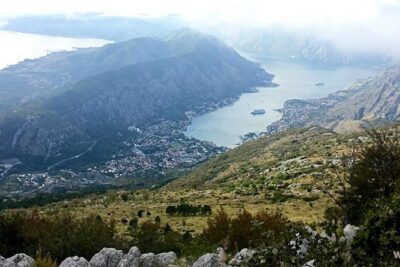
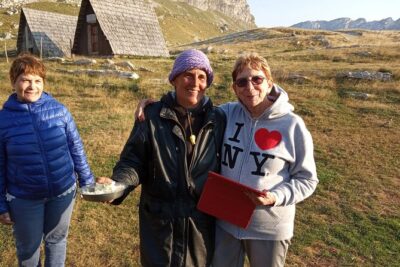
Ostrog & Montenegrin Monasteries, compared.
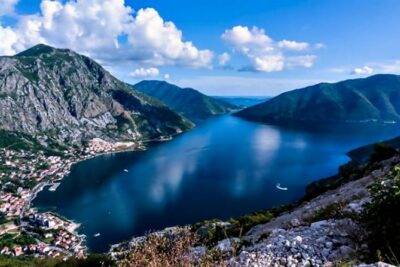 ★ 5.0North Montenegro, Durmitor, Tara & Ostrog TourFrom $95413 reviews
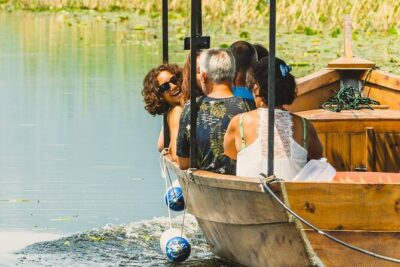 ★ 4.5Skadar Lake National Park: Guided Boat Tour to Kom MonasteryFrom $3849 reviews
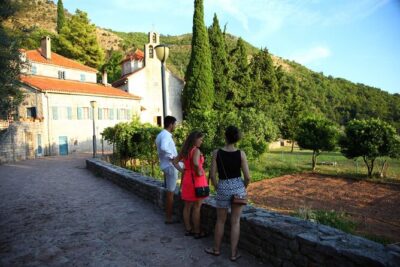 ★ 5.0Great tour of coastal monasteries in Budva – Walking on the path of history!From $6634 reviews
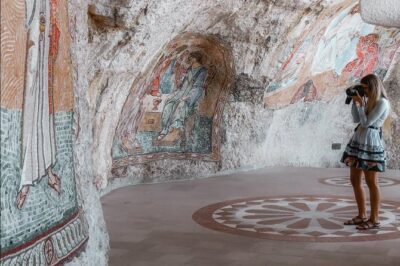 ★ 5.0Ostrog Monastery tourFrom $14232 reviews
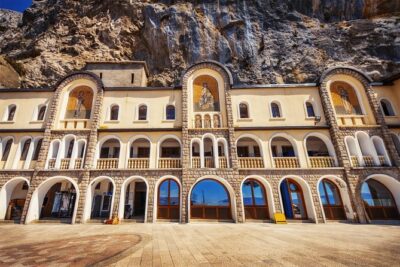 ★ 5.0Ostrog monastery and Niagara waterfallsFrom $16023 reviews
 ★ 5.0Private Tour in Ostrog Monastery, Doclea and Nature Park ZetaFrom $11421 reviews
 ★ 5.0NORTH TOUR Np Biograd Gora-Lake-Moraca Canyon & Monastery-KolasinFrom $1383 reviews
Browse the lists this tour appears in