
REVIEW · CETINJE, NJEGUšI & LIPA CAVE
Cetinje City Tour
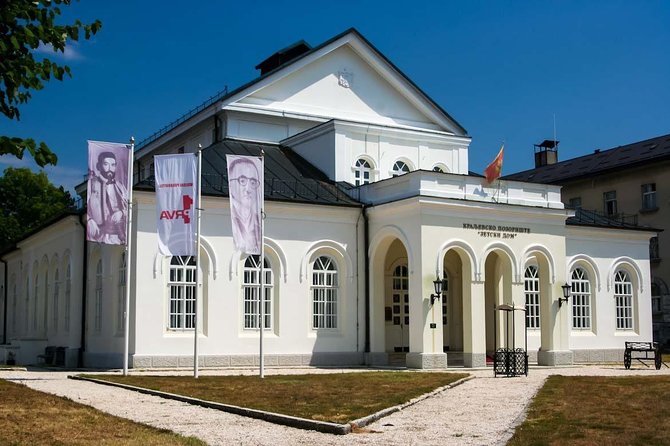
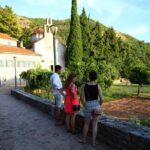
Cetinje feels like Montenegro in miniature. In this Cetinje City Tour, you get the old-capital core as a kind of open-air museum, with Cetinje Monastery anchoring the story and promenades leading your eyes up toward Lovćen’s mountain wall.
I love how compact the historic center is. That matters because the tour moves efficiently, so you can take in major monuments without spending your whole day on logistics. The main consideration is that not everything is included, and some museum interiors may require extra payments, so read your expectations before you go.
I also like the clear lineup of sites that connect to specific people, Petar II Petrović Njegoš at Biljarda, and King Nikola through his museum. The route is short, so it’s best if you’re the type who enjoys quick context and moving on, not the type who wants to sit in every room for ages.
In This Review
- Key highlights you’ll notice right away
- Why Cetinje City Tour works when you’re short on time
- The practical reality: price, what’s included, and what’s not
- Stop 1: St. Peter of Cetinje, Cetinje Monastery, and Ćipuri church
- Stop 2: Njegoš Museum Biljarda, Petar II Petrović Njegoš’s residence
- Stop 3: King Nikola’s Museum in the 1867 building
- Stop 4: Presidential Palace, Royal Theater Zeta house, Ivan Crnojević, and the main street stroll
- Group size, timing, and guide quality (the difference you’ll actually feel)
- Getting to Cetinje from Budva, and what to plan for
- Who should book this tour (and who might skip it)
- Tips to get more out of every stop
- Should you book the Cetinje City Tour?
- FAQ
- How long is the Cetinje City Tour?
- Where does the tour start and end?
- What is included in the price?
- Are entrance fees included?
- Do I need to arrange my own transfer to Cetinje?
- Is this a private tour?
- Is there a mobile ticket?
- Is the tour weather-dependent?
- Can I get a refund if I cancel?
- Are service animals allowed?
Key highlights you’ll notice right away
- A true sampler of the old capital in about one hour, centered on Cetinje’s most recognizable monuments
- Cetinje Monastery and Ćipuri church are free on this route, so you start with value
- Biljarda and King Nikola’s Museum are included as visits, but their entry fees are not included
- Your guide connects buildings to names, including Petar II Petrović Njegoš and King Nikola
- A main-street walk rounds it out, so you see more than just museum walls
- Private-group feel, since it’s only your group on the tour
More of the old capital, the smokehouse village and the cave
- 1-Hour Guided Lipa Cave Adventure in Montenegro★ 5.0 · 342 reviews
Why Cetinje City Tour works when you’re short on time
Cetinje is Montenegro’s former capital, founded in the 15th century. It sits in a valley backed by the huge mountain Lovćen, which means even when you’re walking, you get that sense of being framed by nature. The best part is that the historic core feels designed for strolling, with parks and promenades next to 18th and 19th century architecture.
This tour takes about one hour, and that speed is the point. If you’re basing yourself around Budva, you probably want a payoff fast: a compact route that points you toward what matters most in Cetinje. You’re not just seeing sights, you’re getting the names behind them and the reason they’re there.
Two things make it feel worth your time. First, the starting stop includes Cetinje Monastery and the Ćipuri church, and those have free admission. Second, your licensed English guide helps you connect what you’re looking at to the city’s story, from the era of King Nikola to the royal residences that still shape the streets today.
The practical reality: price, what’s included, and what’s not
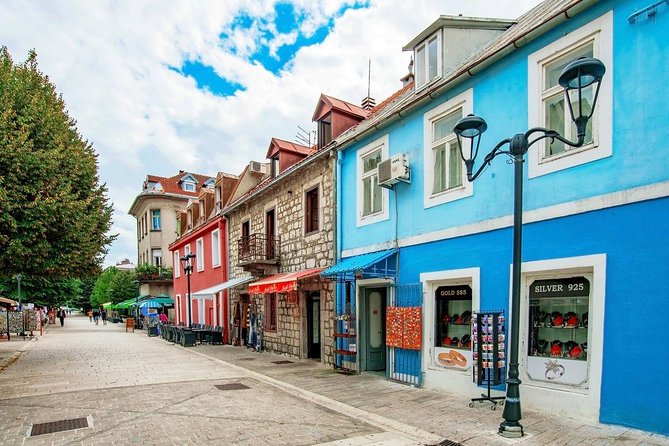
The tour costs $115.50 per person for about 1 hour. That price sounds high only if you compare it to a casual walk. Compared to what you’re getting, it’s more like paying for a local guide who can make a short route make sense.
Here’s the value math to keep in your head:
- Included: a licensed English guide and tourist tax
- Not included: transfer from your accommodation to Cetinje, and entrance fees for localities (with specific exceptions on the route listed below)
In other words, you should plan your budget as guide-led sightseeing plus a couple of optional paid interiors. Biljarda and King Nikola’s Museum are called out as not included for admission, while the monastery and Ćipuri church are free.
Also, this tour is described as private, meaning it’s only your group. That tends to work well for families, couples, and small friend groups, because you can move at a shared pace without strangers steering the conversation.
Stop 1: St. Peter of Cetinje, Cetinje Monastery, and Ćipuri church
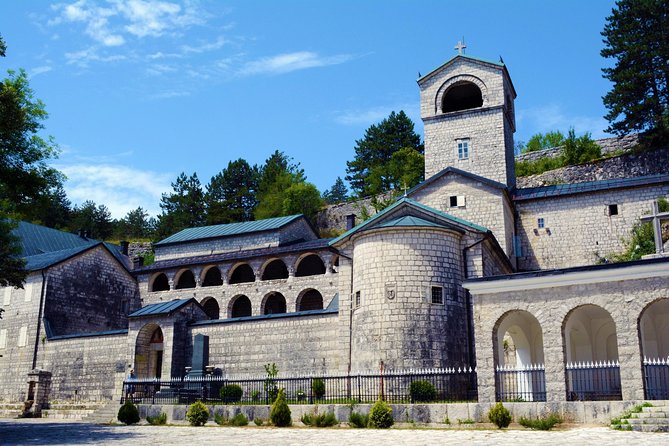
The tour starts at St. Peter of Cetinje, with Cetinje Monastery as the main focus. The monastery is the town’s most important monument, built in 1701 and dedicated to the birth of the Virgin. Even if you’re not a church person, the monastery’s role in the city is easy to grasp. It’s the kind of landmark that shaped where other institutions grew, and it still gives Cetinje its center of gravity.
From there, you also visit Ćipuri church. The visit time is short, about 10 minutes, but you’ll get enough context to understand why it’s grouped with the monastery stop rather than treated as a random extra.
What you’ll like here:
- You start with a place that anchors the entire city’s identity.
- It’s one of the only parts of the route where admission is free, which makes your opening feel instantly good.
What to watch:
- Monastery rules matter. One of the key pieces of advice you should take is to be respectful of the monastery environment, especially around behavior and clothing. If you’re unsure, ask your guide what’s expected on the day you visit.
Stop 2: Njegoš Museum Biljarda, Petar II Petrović Njegoš’s residence
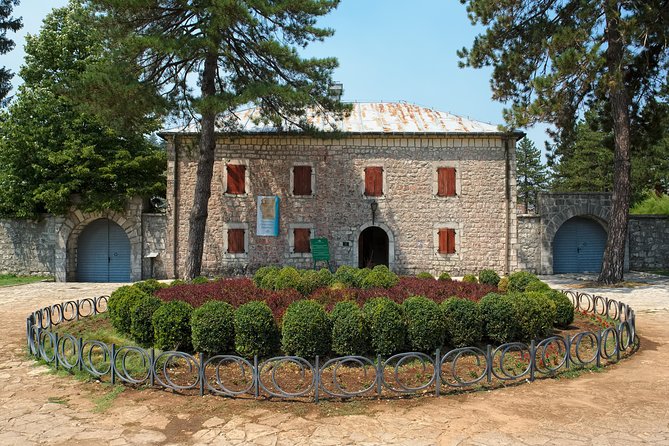
Next up is Njegoš Museum Biljarda, the former residence of Petar II Petrović Njegoš. Biljarda is the kind of stop that turns a name into a real place. If you want to understand Cetinje as a historic capital rather than just a set of old buildings, this is where that shift happens.
The time here is again about 10 minutes, and admission for this stop is not included. That’s important, because it’s one of the points where your total cost could creep up slightly based on what you choose to enter.
Even with a short visit, Biljarda tends to do two things for you:
- It shows the political and cultural weight behind the city’s royal era.
- It gives you a visual reminder that Cetinje wasn’t only about religion. It was also governance, art, and education under the Montenegrin royal world.
If you’re trying to decide whether to pay for an interior when you arrive, my practical take is simple: if you’re the type who likes connecting museum objects to the people who lived nearby, this is the more interesting paid stop on the route.
Other town-scale outings
- Private Transfer from Budva to Podgorica Airport and city
★ 5.0 · 4 reviews - Cetinje City Tour
★ 4.5 · 4 reviews
Stop 3: King Nikola’s Museum in the 1867 building
After Biljarda, you head to the Museum of King Nikola, located in a building dating to 1867. This stop is only 10 minutes, and its admission is not included, so it’s best to go in ready to focus.
King Nikola is a key reason Cetinje looks the way it does. During his time, numerous embassies of different countries were built in the city, creating a distinctive appearance. That embassy chapter is one of the most useful ideas to keep in mind while you walk, because it explains why the architecture feels layered rather than uniform.
What I like about this stop on a short tour:
- You get the “why” behind the look of Cetinje without needing a full museum day.
- A guide-led visit helps you avoid the classic problem of staring at walls without context.
What you might not love:
- Ten minutes can feel fast. If you want to read every label, you may feel rushed. This tour is built for orientation and highlights, not for deep studying.
Stop 4: Presidential Palace, Royal Theater Zeta house, Ivan Crnojević, and the main street stroll
The final stretch is about royal power plus the city’s founders and public spaces. You visit the Presidential Palace, the royal theater known as the Royal Theater Zeta house, and the monument of Ivan Crnojević, Zeta ruler and founder of Cetinje.
Then you take a walk along the main street, with the tour ending back at the starting meeting point. The time here is about 30 minutes, and this part is listed with free admission on the schedule, though remember that the general rule says entrance fees for localities are not included.
This is the portion that helps your brain stitch everything together:
- Monuments tell you who mattered.
- Public buildings tell you how the city functioned.
- The street walk makes Cetinje feel like a living place, not a photocopy of old photos.
A word of caution from real-world experience: if you care about photography, it’s worth knowing that some interior spaces can have restrictions. That’s not unusual in palaces and museums, so set your expectations to focus on what you can photograph outside or where rules allow it.
Also, if it has been rainy or gloomy, this is the segment you’ll feel most. Cetinje is a walkable historic center, so good weather helps the city look and feel like itself.
Group size, timing, and guide quality (the difference you’ll actually feel)
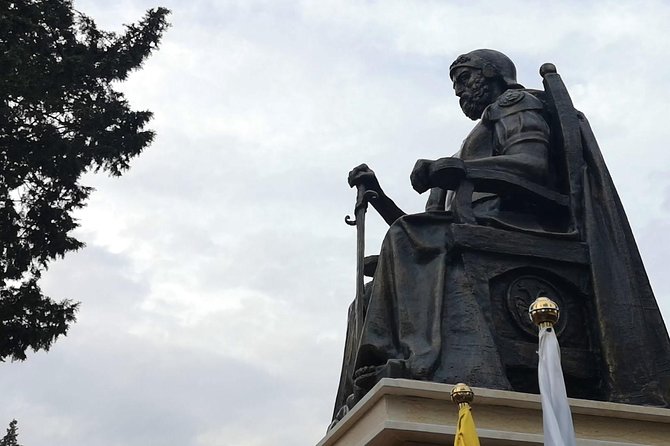
This tour is private, meaning you’re not competing with strangers for attention at each stop. That changes the feel more than most people expect. In a city like Cetinje, where the names and dates matter, a guide can tailor the pace to your questions.
One guide name that stands out from feedback is Filip. Even without getting into personal anecdotes, the lesson for you is clear: a good guide turns quick stops into meaningful understanding. Instead of memorizing dates, you start recognizing patterns, like how King Nikola shaped the city’s diplomatic-era look, or why Biljarda matters for Montenegro’s cultural identity.
The schedule is built to keep you moving:
- Stop 1 about 10 minutes
- Stop 2 about 10 minutes
- Stop 3 about 10 minutes
- Stop 4 about 30 minutes
If you’re the type who tends to drift while reading every sign, you might end up wishing you had more time. If you’re comfortable with a highlights approach and you enjoy learning just enough to guide your future self-guided walk, this timing will suit you.
Getting to Cetinje from Budva, and what to plan for
Transfer is not included, and your tour meeting point is Cetinje Municipality. That means you should plan your transport ahead of time, especially if you’re coming from Budva. The easiest way to keep the tour smooth is to aim to arrive a little early, use the waiting time to get oriented, and then let the guide lead.
Also remember the tour requires good weather. If the tour is canceled due to poor weather, you’ll be offered a different date or a full refund. In practice, this matters because Cetinje is a walking-heavy experience even though it’s only an hour long.
Pack for sidewalks. Old towns can mean uneven pavement. Bring comfortable shoes, keep your coat handy if skies change, and you’ll have fewer distractions.
Who should book this tour (and who might skip it)
You should book this tour if:
- You want a fast, focused introduction to Cetinje without committing to a long museum day
- You like guided context that connects buildings to key figures like King Nikola, Petar II Petrović Njegoš, and Ivan Crnojević
- You’re traveling with a small group and prefer a private experience
You might skip it if:
- You want long museum time and slow reading inside multiple interiors
- You strongly dislike paying extra entrance fees for museums, since Biljarda and King Nikola’s Museum are marked as admission not included
- You’re visiting mainly for photography inside palaces, since interior rules can limit what you can do
And one more reality check. Cetinje’s center is the focus here, but like many old cities, different blocks can feel better preserved than others. If you’re sensitive to that, keep your attention on the monastery core and the main-street monuments, where the tour’s story is concentrated.
Tips to get more out of every stop
- Start with the mindset of orientation. In one hour, your job is to learn the framework, then decide what to return to on your own.
- Pay attention when your guide links names to buildings. It’s the fastest way to turn a short tour into real memory.
- For the paid museums, decide in the moment based on your energy. Biljarda and King Nikola’s Museum are the ones most likely to affect your extra spending.
- If you’re sensitive to pace, mention that at the start. Private groups make it easier to adjust a bit.
Should you book the Cetinje City Tour?
If your goal is a sharp first taste of Montenegro’s old capital, I’d book it. The route is short, the starting stop includes free admission at the monastery and Ćipuri church, and the guide-led order makes the city make sense quickly. At $115.50 per person, it’s not a budget stroll, but it is good value for an efficient, names-and-places overview.
If you prefer deep museum time, or you want everything fully included with no extra tickets, you may feel constrained. In that case, you might be happier planning a longer Cetinje day. But for one hour of guided clarity, this tour is a strong fit.
FAQ
How long is the Cetinje City Tour?
It lasts about 1 hour.
Where does the tour start and end?
The tour starts at Cetinje Municipality, Montenegro and ends back at the same meeting point.
What is included in the price?
The tour includes a licensed tourist guide in English and the tourist tax.
Are entrance fees included?
Admission fees are not included for localities in general. On this route, admission is free for Cetinje Monastery and Ćipuri church, while admission for Biljarda and King Nikola’s Museum is not included.
Do I need to arrange my own transfer to Cetinje?
Yes. Transfer from your accommodation to Cetinje is not included.
Is this a private tour?
Yes. Only your group participates.
Is there a mobile ticket?
Yes, you receive a mobile ticket.
Is the tour weather-dependent?
Yes, it requires good weather. If canceled due to poor weather, you’ll be offered a different date or a full refund.
Can I get a refund if I cancel?
No. The experience is non-refundable and cannot be changed for any reason.
Are service animals allowed?
Yes, service animals are allowed.
More Montenegro Tours


The Rest of the Montenegro File

Cetinje, Njegusi and the Lipa Cave
Other Montenegro trips we have written up
Cetinje, Njeguši & Lipa Cave, compared.
 ★ 5.01-Hour Guided Lipa Cave Adventure in MontenegroFrom $20342 reviews
 ★ 5.0GREAT MONTENEGRO TOUR Cetinje – Njeguši – Kotor – Budva – Bečići – Saint StefanFrom $20569 reviews
 ★ 5.0National Park Lovcen and Lipa Cave (Private tour)From $24717 reviews
 ★ 5.0National parks and wine tasting (NP Lovcen, NP Skadar lake, Cetinje, Njegusi)From $27416 reviews
 ★ 5.0Cable car + Electric MTB from Njegos Mausoleum to Kotor bayFrom $19811 reviews
 ★ 5.0Lovcen – Symbol of Montenegrin Freedom including Budva & CetinjeFrom $27311 reviews
 ★ 5.0Private Tour- Skadar lake NP, Cetinje, Lovćen NP – The beauty of old MontenegroFrom $1568 reviews
 ★ 5.0Bike tour – Panoramic downhill from Njeguši and Kotor serpentinesFrom $1267 reviews
Browse the lists this tour appears in